
Aaron Rodericks of Bluesky on why decentralized content moderation isn’t easier. It changes where power sits
February 3, 2026 | By Jeff Meyer | UGCFor years, the technology industry has treated content moderation as a scaling problem. Get enough data. Build better models. Hire more reviewers. Centralize decision‑making, and with enough investment, the hardest questions about online speech will eventually become manageable.

Decentralization is sometimes framed as the next step in that evolution. A way to distribute moderation, reduce platform liability, and relieve trust and safety teams under growing pressure.
But decentralized moderation isn’t a shortcut. It represents a shift in how authority and responsibility are distributed between platforms and their users and communities. And that shift comes with trade-offs.
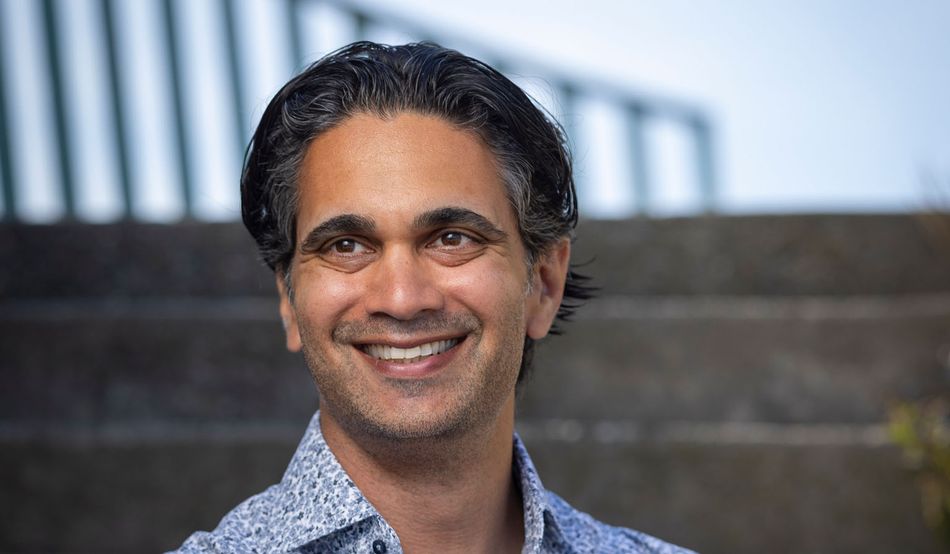
As Aaron Rodericks, Head of Trust & Safety at Bluesky, explained when we spoke for the Trust Issues podcast: “You can’t give power to users without adding more responsibility as part of it.”
Those trade-offs don’t make decentralization a failure. Rather, they make it a fundamentally different model, with different goals, risks, and values.
But first, it’s worth clarifying what we actually mean by decentralized content moderation, especially for readers encountering the concept for the first time.
What is decentralized content moderation?
At its simplest, decentralized content moderation breaks away from the idea that a single company should define, interpret, and enforce the rules of online speech for everyone on a platform.
In a traditional, centralized model, moderation works top‑down. The platform sets one global rulebook, enforces it through internal teams and automated systems, and applies the same judgments to all users, regardless of context, community, or personal preference.
Decentralized moderation keeps a baseline layer of platform enforcement, particularly for the most severe forms of harm, but pushes many moderation decisions outward.
Rather than relying on one authority, users can opt into additional layers of moderation run by third parties, communities, or even individuals. These layers can take the form of labeling services, shared blocklists, or community‑specific rules that sit on top of the platform’s core safeguards.
In practice, this means two people on the same platform may have very different moderation experiences. One user might choose stricter filters and community‑run labels, while another opts for a lighter‑touch approach. The platform provides the infrastructure, but not a single, universal definition of what content should be seen by whom.
As Rodericks explains, the goal is to push moderation power “downwards more into the hands of users” and give people greater control over their daily online experience.
How moderation became centralized in the first place
Modern content moderation grew up alongside advertising‑driven platforms. The larger the platform became, the more data it collected, and the more tightly moderation decisions were centralized.
One company. One rulebook. One enforcement authority.
Rodericks likens this to a judicial system that operates permanently at the level of a Supreme Court. Every decision from harassment to misinformation to hate speech is escalated to a single authority that sets the norms for everyone.
That model brought consistency and scale. But it also concentrated power. A small number of companies, and often a small number of people inside them, became de facto arbiters of speech for huge, global communities.
“That’s not a decision that any individual should make,” Rodericks says. “And unfortunately, that’s a reflection of modern society where we have a few individuals with an incredible amount of power deciding the norms of speech writ large.”
 What decentralization actually changes
Decentralized content moderation does not mean the absence of rules – and Rodericks is careful to stress that point.
On Bluesky, the platform still provides a baseline layer of enforcement. “We still have to do the baseline content moderation,” he explains. “We don’t want anyone to try and take on the really hard tasks of taking the worst of the worst content off the internet. We’re going to do that for you.”
What decentralization changes is not whether moderation happens, but where judgment is applied and who gets to shape it.
In a centralized system, moderation decisions are universal by default. One interpretation of safety, harm, or acceptability is applied to everyone, everywhere. Decentralized systems deliberately break from that assumption.
Instead, platforms provide infrastructure, while users and communities layer additional forms of moderation on top. These can include shared blocklists, labeling services, or automated moderation rules that reflect specific values, identities, or risk tolerances.
Crucially, these layers are opt-in. If a community creates a labeling service to identify harassment targeted at a specific group, only users who subscribe to that service see and act on those labels. Others may never encounter them at all.
Rodericks points to this as a necessary response to context collapse. “We are never going to be able to create the level of context-specific moderation that meets every single community out there,” he says. “That’s exactly the problem we’re trying to solve.”
This model reflects an assumption that different communities may require different standards, and that enforcing a single global norm can sometimes overlook context, while also introducing new challenges around consistency and oversight.
At the same time, decentralization introduces visible trade-offs. Users can encounter radically different versions of the same platform depending on which moderation layers they adopt. Consistency gives way to pluralism.
For trust and safety teams, this means moving away from universal verdicts and toward bounded responsibility, setting hard limits at the baseline, while allowing judgment, interpretation, and filtering to happen closer to the communities affected.
Why decentralized moderation is harder, not easier
From a trust and safety perspective, decentralization removes many of the advantages platforms have relied on for years.
Large centralized systems are built on data abundance. Signals are aggregated. Patterns are detected. Context is inferred at scale. In decentralized systems, that data simply doesn’t exist… by design.
“We collect very minimal data,” Rodericks explains. “And yet people expect you to have perfect context – gender, history, intent – factored into every decision. That’s just not possible.”
This creates an uncomfortable tension. Users want privacy. Regulators want accountability. Law enforcement wants access. Trust and safety teams are expected to satisfy all three, and often with fewer tools than ever.
“Trust and safety is a mixture of impossible requirements from users,” Rodericks says. “Decentralization makes all of those much harder.”
The benefits, he argues, accrue almost entirely to users. They gain control over their experience, their data, and their communities. Platforms gain complexity.
Shifting power from platforms to users
If decentralization changes where moderation decisions are made, it also changes who is expected to take responsibility for online safety.
In centralized systems, responsibility flows upward, but decentralized moderation challenges that model. Instead of relying entirely on a central authority, users are asked to play a more active role in shaping their own online environments, deciding whose judgments they trust, which communities they align with, and what kinds of content they want filtered out.
This is not about abandoning platform responsibility. Bluesky still draws hard lines around the most serious harms and provides default protections for users who do not want to engage with additional controls. But decentralization introduces the idea that safety is not purely something done to users by platforms, rather it is something users can participate in shaping.
Rodericks frames this as a move away from what he calls a “patriarchal” model of safety, where users outsource all responsibility upward, toward one that recognizes shared accountability. “If you try to say, I’m never going to take care of any of my safety… because the platform is responsible for me, that’s kind of the immature state we’re stuck in,” he says.
The shift is cultural as much as it is structural. Giving users more power introduces trade-offs: more choice, but less uniformity; more control, but more responsibility. And as Rodericks points out, not everyone wants that.
This tension between empowerment and expectation sits at the heart of decentralized content moderation, and it helps explain why the model is both promising and deeply uncomfortable for platforms and users alike.
The responsibility gap
The shift toward user empowerment exposes a tension that decentralized systems cannot avoid: many users say they want control, but far fewer want responsibility.
Even when platforms provide granular moderation tools, most people default to expecting someone else to manage risk on their behalf. Years of centralized moderation have trained users to see platforms as custodians responsible not just for infrastructure, but for emotional safety, cultural norms, and conflict resolution.
Rodericks describes this expectation bluntly. “People would like a single neck to choke,” he says. “They would like a single person to yell at, and that person is me.”
In decentralized environments, that mindset becomes a mismatch. Users may have access to blocklists and community-led moderation layers, but many are unwilling or unsure how to use them. As a result, responsibility is technically distributed, but accountability still flows upward.
This gap matters because it shapes how decentralized systems are perceived. When something goes wrong, critics often see decentralization itself as the failure, rather than the cultural lag between new tools and old expectations.
Rodericks is clear-eyed about this challenge. Giving users more control does not automatically make them safer. Defaults still matter. Baseline protections still matter. And platforms cannot simply hand responsibility to users and walk away.
Decentralization, in practice, means designing systems that work for people who never touch a setting, while still enabling deeper control for those who want it. Closing the responsibility gap is less about education and more about careful design.
Abuse, evasion, and hard limits
A common criticism of decentralized content moderation is that it creates space for abuse to flourish, allowing bad actors to migrate toward the least restrictive communities and evade enforcement.
Rodericks does not dispute the risk. Instead, he treats it as an inevitable feature of open systems. “People will create spaces that don’t align with your values,” he says. “That’s a state of the internet.”
Decentralization does not eliminate harmful behavior, but it does change how platforms respond to it. Rather than attempting universal enforcement across every possible space, platforms like Bluesky focus on setting non-negotiable boundaries at the baseline.
In cases involving severe harm, particularly around child safety, decentralization stops. Content is removed entirely, across all layers of the system. As Rodericks explains, the platform will “burn it down all the way to the relay level.”
Outside those hard limits, separation becomes the primary safety mechanism. Communities that fundamentally diverge in values can be disconnected through defederation, preventing harmful content from spreading into spaces that reject it.
This approach accepts a reality centralized platforms often resist: that not all speech can or should be governed by a single global standard. In decentralized systems, safety is often pursued through boundaries and separation rather than universal control.
The trade-off is visibility. Harmful ideas may persist in isolated pockets, but they are less likely to be amplified or normalized across the wider network.
What this all means for trust & safety teams
For trust and safety professionals, decentralized content moderation represents less a new discipline than a more demanding version of an existing one.
Many of the assumptions that underpin large-scale trust and safety operations, such as abundant data, mature tooling and clear escalation paths, no longer hold. Decisions are made with limited context, incomplete signals, and fewer automated safeguards.
Rodericks describes the work succinctly: “It’s basically the trust and safety job, but on extremely hard mode.”
This environment places a premium on judgment rather than process. Teams must be comfortable making calls without perfect information and defending those decisions in public, often to users who assume bad intent.
Resource constraints also loom large. Decentralized platforms are frequently smaller, privacy-first, and less monetized than their centralized counterparts. Practices that are routine at large platforms – from expensive third-party tools to data-intensive models – may be financially or ethically impossible.
As a result, trust and safety work in decentralized systems looks increasingly like early-stage or startup T&S: small teams, broad remits, constant trade-offs, and limited room for error.
For the industry, this shift raises an important question. If decentralization spreads, trust and safety expertise will remain important, but it may need to adapt to environments where control is shared and success is measured differently than in centralized systems.
Decentralization as infrastructure, not a fix
Decentralized content moderation won’t magically make the internet safer. It doesn’t remove the need for enforcement or judgment or accountability.
What it does is redistribute power.
In five years, Rodericks hopes to see independent moderation ecosystems operating alongside platforms in the form of communities with their own rules, tools, and accountability structures.
Whether or not any single platform succeeds, he sees moderation as moving away from centralized authority and toward participatory governance.
And the hardest part of that transition isn’t technical. It’s cultural.
Decentralized content moderation is not a definitive answer to the challenges platforms face today, but one of several models being explored across the industry as teams grapple with scale and accountability. What it ultimately forces the industry to confront is a difficult question: do safer systems come from tighter control or from more thoughtfully shared responsibility?