
Human moderation vs AI moderation: do you need both?
June 9, 2026 | By Jeff Meyer | UGCAI has changed the conversation around content moderation. For platforms under pressure to review more content, in more formats, across more languages and communities, the promise of faster decisions, greater scale, more consistency and lower operational strain is appealing.
But the debate is often framed in the wrong way. Many people ask whether AI moderation will replace human moderation, but the better question is how AI and human expertise should work together.
Content moderation is not only a volume problem; it’s also a judgment problem. Harmful content doesn’t always arrive in obvious forms. Abuse can be coded. Scams can look legitimate. Misinformation can depend on timing and context. Hate speech can hinge on intent, identity, language and cultural meaning. And policies often need to be applied to messy, ambiguous situations that don’t always fit neatly into a binary decision.
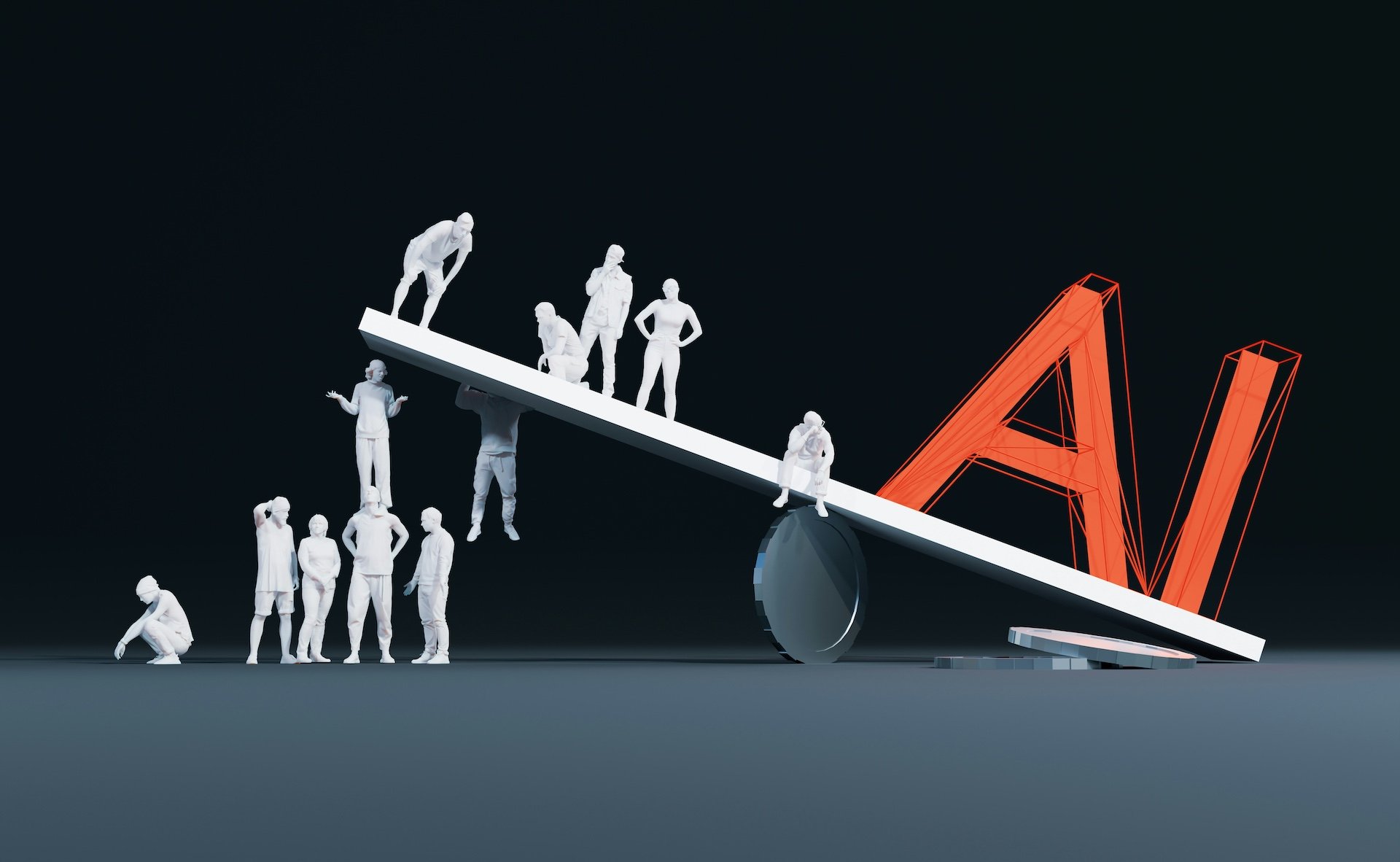
This is why the future of moderation shouldn’t be framed as a human-versus-AI debate. Rather, it is human and AI.
As Alexandra Popken, SVP of Trust & Safety and AI Services at WebPurify, an IntouchCX company, says, “Humans will remain absolutely essential to content moderation, even as AI systems become more sophisticated. AI can speed things up and support enforcement at scale. It can help teams identify patterns and prioritize risk. But humans remain central to trustworthy moderation because they bring the context, policy judgement and accountability that automated systems alone cannot provide.”
For most platforms, Popken believes the strongest approach is a hybrid model: AI handles what it can do quickly and consistently, while human moderators, policy specialists and quality assurance teams focus on the decisions where judgment matters most.
Ailís Daly, Head of Trust & Safety, EMEA, at WebPurify, adds, “A strong hybrid model, is not simply ‘AI does the easy stuff, humans do the hard stuff.’ It’s a deliberately designed system where each layer plays to its strengths and feeds the others.”
AI moderation has been around longer than generative AI
It is easy to talk about AI moderation as if it arrived on the scene with ChatGPT, large language models and the current wave of generative AI tools. But in reality, AI has been part of the moderation process for years, quietly working behind the scenes.
As Popken explains, early moderation systems used machine-learning classifiers long before today’s generative AI models entered the mainstream. These systems were far more basic than modern LLMs, but they still did a lot of important work. They helped platforms detect repeat violations, match known harmful content, classify obvious policy breaches and process large volumes of material that would be impossible for human teams to review manually.
That older generation of AI moderation was especially useful for scale. It could help flag or remove content that matched clear signals, such as known child sexual abuse material hashes, spam patterns, obvious nudity, graphic content or duplicate uploads of previously removed material.
What has changed is not the idea of using AI in content moderation, but that AI may now be able to understand.
Large language models and multimodal AI systems are opening up new possibilities for moderation because they can process language, images, video, audio and context in more advanced ways. They can help summarize reports, triage queues, identify emerging patterns and support moderators as they apply policy. They can also help Trust & Safety teams move faster when the volume of content, reports and enforcement decisions is growing.
But stronger AI doesn’t remove the need for human judgment. In many ways, it makes that judgment more important.
What AI moderation does well
AI moderation is strongest when the task is high-volume, repetitive or based on patterns that can be reliably detected.
For example, AI can help platforms identify content that is highly likely to violate policy, route reports to the right review queue, prioritize the most urgent cases, detect duplicates, surface behavioral patterns and apply consistent rules to clear-cut categories of content. It can also reduce the burden on human moderators by filtering out obvious violations or low-risk content before they reach review.
This is especially important for platforms that host user-generated content at scale. A marketplace, gaming platform, dating app, social network or creator platform may receive huge volumes of posts, messages, images, videos, reviews, listings and user reports every day. Without automation, moderation teams can quickly become overwhelmed.
AI can help by acting as the first layer of detection and triage. It can spot content that needs urgent attention. It can group similar cases together. It can help identify coordinated behavior or repeat abuse. It can also support consistency by applying the same detection logic across large datasets.
Daly says the biggest wins today are “speed, scale, and consistency,” especially for high-volume, lower-ambiguity decisions such as CSAM detection, spam, known-bad imagery and obvious policy violations. She also points to a less obvious benefit: reviewer wellbeing. AI can pre-blur or filter the most traumatic material so human moderators only see what they truly need to review.
Generative AI and LLMs add another layer of potential value. Because these models are better at working with language and context than older classifiers, they can support more nuanced workflows. They may even help moderators understand a conversation thread, summarize a long user history, translate content, suggest relevant policy areas or highlight why a case may require escalation.
Used well, AI doesn’t simply replace human work. Rather, it makes human review more focused, allowing moderators to spend less time on obvious cases and more time on complex, high-risk or sensitive decisions.
Where AI moderation falls short
The challenge is that moderation is rarely just about whether a piece of content contains a prohibited word, image or phrase. Often, the hardest decisions depend on context.
Daly points to the categories where context changes everything, such as satire, reclaimed slurs, counter-speech, news reporting on violence, cultural and linguistic nuance, evolving slang and coded hate. The same applies to self-harm content, where a post might be seeking help, documenting recovery or glorifying harm.
These are not always decisions AI can make reliably on its own. It can support the review process, but it cannot always read the room.
“Policy decisions, nuance, context and intent are not easy calls,” Popken says. “That is why content moderation cannot simply be treated as a detection problem. It is about interpreting behavior against a platform’s policies, user expectations and real-world risk.”
AI systems can also struggle with emerging harms. Bad actors adapt quickly. They test moderation systems, change language, use coded terms, manipulate images, move across channels and exploit gaps between policy and enforcement. A model trained on yesterday’s abuse patterns may miss tomorrow’s version.
There are also risks in over-enforcement. If AI removes too much content, users may feel censored, confused or unfairly treated. If it removes too little, harmful behavior can spread and undermine trust. Inconsistent or opaque decisions can damage the user experience almost as much as the original harm.
This is why platforms need human oversight, especially in categories where the stakes are high. Child safety, extremist content, self-harm, non-consensual intimate imagery, hate and harassment, scams, misinformation and appeals often require careful judgement, escalation pathways and quality assurance.
“AI can support those decisions, but it should not be the only layer of accountability behind them,” Popken says.

Why human moderators are still essential
Human moderators are often described as the people who review content that AI cannot handle. That is true, but it understates their role.
Human moderators are not only a fallback. They are the people who help make moderation trustworthy.
They interpret policy in context. They identify edge cases. They understand when a decision may require escalation, spot new patterns of abuse, and help platforms understand how rules are working in the real world. They bring cultural, linguistic and community awareness that can be difficult to capture in a model.
They are also essential when users challenge enforcement decisions. Appeals are an important part of a healthy moderation system because they give users a route to correct mistakes. A platform that relies too heavily on automated enforcement without meaningful review can quickly lose user trust.
Human judgment is especially important when enforcement decisions affect a user’s livelihood, reputation, access to the community or sense of safety. Removing a creator’s video, suspending a seller’s account, restricting a user’s messages or rejecting an appeal are not just operational decisions. They are customer experience moments.
This is where human moderators, policy teams and QA specialists add value. They help ensure decisions are fair, explainable and aligned with the platform’s policies. They can also identify when a policy itself needs to change because users, harms or platform features have evolved.
In that sense, humans aren’t simply reviewing content. They are maintaining the integrity of the moderation system.
AI moderation still needs humans behind the scenes
Popken is adamant that moderating AI itself requires humans, and this is often missed in discussions about automation. Even when AI plays a larger role in moderation, people are still needed to design, train, test, monitor and improve those systems.
Human teams label datasets. They review model outputs, check whether the system is applying policy correctly, write and refine prompts, and test for failure modes. They also red-team risky scenarios. They review edge cases. They identify bias, inconsistency and blind spots. They help decide when the model is ready for production and when it needs further tuning.
As Daly explains, “The model is downstream of human judgment at every stage; ‘AI moderation’ is really ‘human judgment, operationalized at scale.’”
“AI doesn’t eliminate human moderation work,” Popken adds. “It just changes where some of that work happens.”
Instead of only reviewing individual pieces of content, human experts increasingly help manage the moderation system itself. They become part of the loop that keeps AI aligned with policy, user safety and platform values.
This is particularly important as platforms begin using LLMs in more complex workflows. A model might help summarize a case, recommend a policy area or suggest an enforcement action, but someone still needs to know whether that output is accurate, fair and appropriate. Without human review and QA, platforms risk automating mistakes at scale.
The irony, Popken notes, is that more AI can create a new category of human-in-the-loop moderation. The work does not disappear. It becomes more specialized, more analytical and more connected to model performance, policy design and operational governance.
The best moderation model is hybrid
For most platforms, the right model isn’t AI-only or human-only. It’s a hybrid system that uses each for what it does best.
AI can detect, classify, prioritize and route content at speed. It can help reduce queues, surface risks and support consistent enforcement across large volumes of content. It can give Trust & Safety teams the scale they need to operate in real time.
Human moderators can review complex cases, apply judgement, handle appeals, assess context, identify emerging harms and improve the systems that support enforcement. They can make decisions where the answer depends on more than pattern recognition.
Policy teams can define the rules, clarify thresholds and update guidance as harms evolve. QA teams can monitor consistency, review decisions and identify where workflows are breaking down. Red teams can test how bad actors might exploit gaps in the system. Together, these functions create a moderation operation that is faster, more resilient and more accountable than either AI or humans could be alone.
Daly suggests a useful framework for deciding what should be automated, escalated or reviewed by a human: confidence, consequence and context. High-confidence, low-consequence decisions, such as clear spam or known-bad hashes, can often be automated. High-consequence decisions, such as permanent bans, appeals or child safety cases, should involve human review even when the model is confident. Anything low-confidence or context-dependent should escalate.
A mature hybrid moderation workflow might look something like this: AI flags content, identifies risk signals and routes cases to the right queue. Obvious violations may be actioned automatically where the platform has high confidence and low ambiguity. Borderline or high-risk cases are escalated to human moderators. Human reviewers make judgment-heavy decisions and feed insights back into QA, policy and model improvement. Policy and operations teams then use those insights to refine rules, improve training data, update workflows and strengthen future detection.
That loop is what makes hybrid moderation powerful. AI improves speed and scale. Humans improve judgment and accountability. Together, they create a system that can adapt.
So, do you need both human and AI moderation?
For any platform operating at meaningful scale, the answer is usually yes.
AI moderation is essential for speed, scale and operational efficiency. Human moderation is essential for context, fairness and accountability. One helps platforms move fast enough to keep up with user activity; the other helps ensure the decisions being made are accurate, proportionate and trusted.
The strongest Trust & Safety operations are not trying to replace one with the other. They are building systems where AI supports human expertise, and human expertise makes AI safer, more accurate and more useful.
As Popken argues, AI will speed moderation up, but humans will remain the backbone of trustworthy enforcement. The future is hybrid, not humanless.